Gracha: Elevating Designs with Botanical Color Font Flair
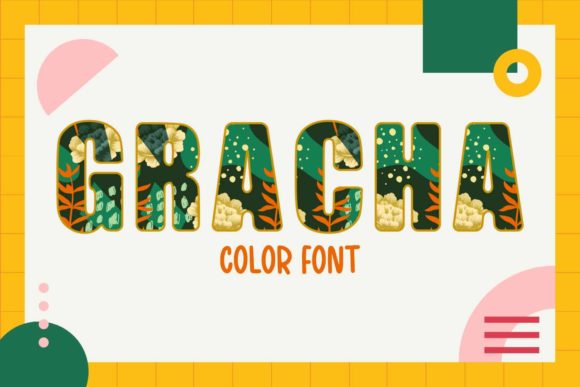
In the crowded world of digital assets, finding a typeface that truly stops the scroll is rare. Most of us default to safe sans-serifs or classic serifs, but occasionally a project demands something with more personality. Enter Gracha, a premium font that defies traditional typography constraints. It isn't just a set of letters; it is a decorative system. As a color font, Gracha arrives with pre-baked visual richness—think intricate botanicals, blooming flowers, and lush leafy textures woven directly into the letterforms. It strikes a balance between a display font and a piece of art, offering a trendy yet timeless aesthetic that instantly elevates any visual composition.
What sets Gracha apart from a standard vector typeface is its depth. While a standard font relies on the designer to add effects, Gracha delivers a fully realized creative font experience out of the box. The "ink" isn't just black or white; it is textured, colorful, and organic. This makes it an exceptional tool for designers who want to skip the hours of manual compositing and get straight to a stunning result. However, understanding how to wield this specific type of modern typography is key to getting the most out of your investment. It is a display font through and through, meaning it shines brightest when used for impact rather than body text.
Where Botanicals Meet Brand Strategy
For brand identity work, Gracha offers a distinct advantage: instant character. If you are working with a client in the wedding industry, floristry, boutique hospitality, or high-end beauty, this font speaks their language fluently. Imagine a logo for a botanical garden or a spa; using Gracha as the primary wordmark instantly communicates elegance, nature, and attention to detail. It functions as a powerful anchor for logo design, particularly when paired with a clean sans serif font for supporting text. The contrast between the ornate Gracha headers and a minimal geometric body text creates a professional visual hierarchy that feels both modern and established.
However, brand strategy requires consistency. Because Gracha is a color font, you need to consider how it renders across different mediums. It is a powerhouse for social media graphics, especially on platforms like Instagram and Pinterest where visual flair drives engagement. A quote card or a promotional story using Gracha feels like a curated piece of art rather than a generic template. Similarly, in packaging design, it can serve as the hero element on a label for artisanal goods—think jam jars, candle boxes, or skincare bottles. The floral elements provide the "shelf appeal" that competitors might be paying illustrators to create manually.
It is worth noting, however, that as a bitmap-based color font, Gracha has specific technical requirements. It is not a standard vector file. Currently, the full-color glyphs are visible in specific environments, including Photoshop CC 2017 and newer, Illustrator CC 2018+, and InDesign CC 2019+. It also functions beautifully in macOS native apps like Procreate, FontBook, and Keynote. If you are using older software, such as Photoshop CC 2015, you will likely see a fallback style. Always test your design assets in your specific environment before committing to a layout to ensure the commercial font renders as intended.
Practical Application: From Screen to Print
When incorporating Gracha into your workflow, think about the medium. For editorial design, such as magazine covers or chapter openers, Gracha can replace traditional drop caps or pull quotes to add a whimsical, organic feel. It works exceptionally well for headers in web design, provided you use it sparingly. Because of the detail in the floral elements, it is best to keep the font size large. If you shrink it down too small, the intricate leafy details may muddy together, compromising readability. The rule of thumb with a handwritten font or decorative style like this is: the bigger, the better.
For content creators and marketers, the goal is often to stop the scroll. Gracha allows you to create high-impact visuals without hiring an illustrator. You can use it for:
- Invitations and Stationery: Perfect for wedding suites or event branding where elegance is non-negotiable.
- Merchandise: Ideal for print-on-demand products like tote bags or t-shirts where the design needs to stand alone.
- Website Hero Images: Use it for a single, large headline to set the mood for a lifestyle or wellness blog.
- Digital Stickers: Create planner stickers or digital assets for iPad users who love the floral aesthetic.
One common mistake entrepreneurs make is trying to use a script font or decorative font for everything. Gracha should not be your paragraph text. It is the headline; it is the hook. To maintain professionalism and readability, pair it with a legible serif font or a neutral sans-serif. For example, a combination of Gracha for the main title and a font like Montserrat or Lora for the subtext ensures that your message is communicated clearly while the aesthetic is preserved. This approach to font pairing ensures your design looks curated rather than chaotic.
Evaluating Fit and Technical Considerations
Before you integrate Gracha into your next project, take a moment to evaluate the fit. Does the brand voice align with a floral, organic, and slightly whimsical personality? If you are designing for a corporate law firm or a heavy industrial manufacturer, this might not be the right tool. But for lifestyle brands, crafters, and hobbyists, it is a game-changer. It allows small business owners to compete visually with larger brands that have dedicated design budgets.
From a technical standpoint, always check the licensing. If you are using this for a client's logo or a product you intend to sell, ensure you have the appropriate commercial font license. Additionally, because it is a color font, be mindful of how it prints on standard office printers versus professional digital presses. While modern printers support color fonts, the results can vary. Always request a proof for print projects.
Finally, don't be afraid to experiment. In apps like Procreate, you can use Gracha to create custom brushes or background textures. In Illustrator, you can outline the strokes to manipulate the vector shapes underneath the color data (depending on how the font file is constructed). Treat Gracha not just as a font, but as a versatile design asset. It is a tool designed to bring joy and beauty to your work, helping you move beyond the monotony of standard typography and create something that truly resonates with your audience.